

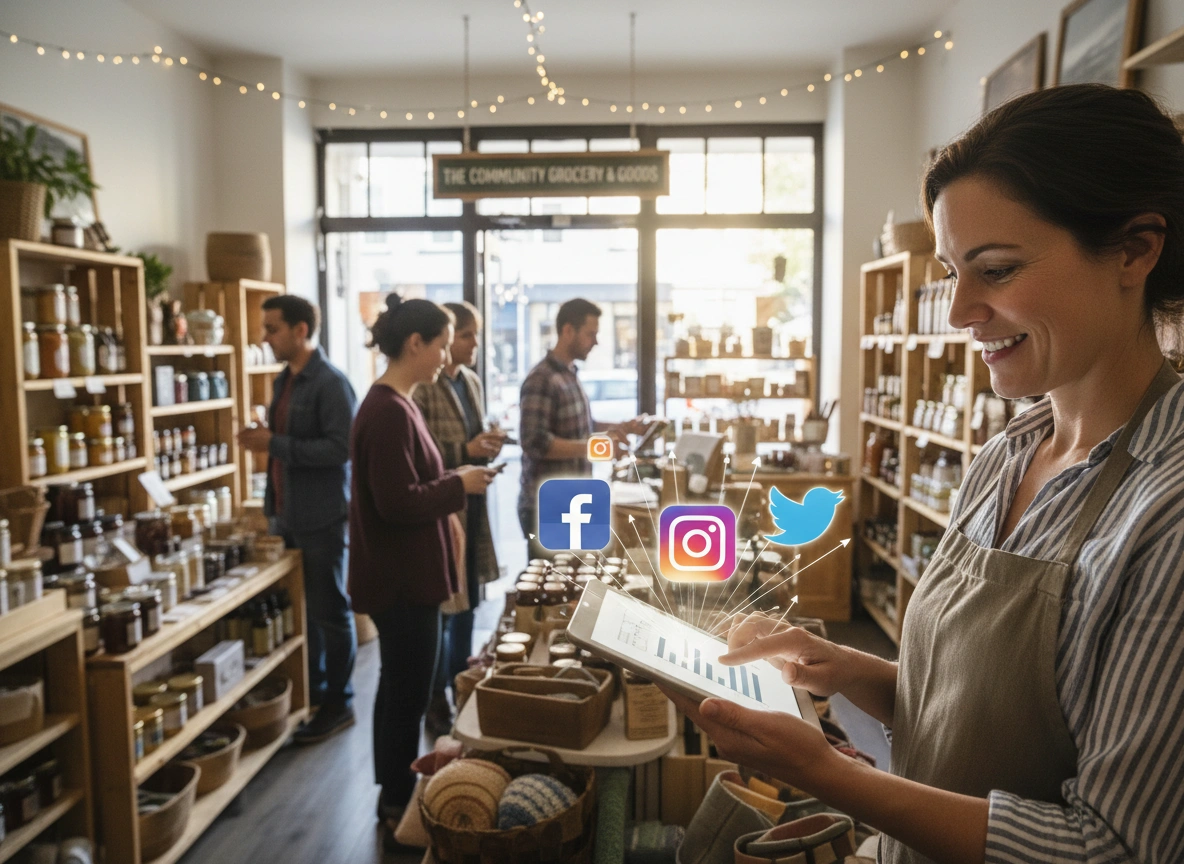
Social media platforms have evolved far beyond places to share vacation photos or catch up with old friends. For small businesses, they are now critical infrastructure. The digital storefront is just as important—if not more so—than the physical one. Social media levels the playing field, allowing a local bakery to reach customers with the same visual impact as a global franchise.
This article explores how social media has become an indispensable engine for small business growth. We will examine the tangible benefits, outline strategies for success, look at real-world examples, and discuss the pitfalls you need to avoid.
Why Social Media Matters for Small Businesses
The days of relying solely on foot traffic or word-of-mouth are behind us. While those elements remain valuable, social media amplifies them exponentially. It provides a direct line to your customers, allowing for a two-way conversation that traditional advertising simply cannot match.
Cost-Effective Marketing
Traditional marketing channels like television, radio, and print often come with prohibitive price tags for small enterprises. Social media offers a low barrier to entry. Creating a profile is free on major platforms like Facebook, Instagram, LinkedIn, and TikTok.
Even paid advertising on these platforms is highly scalable. You can start with a budget of $5 a day and target specific demographics based on age, location, interests, and behavior. This precision ensures that your marketing dollars are spent reaching people who are actually likely to buy your product, rather than casting a wide net and hoping for the best.
Building Brand Awareness and Loyalty
For a small business, your brand is your reputation. Social media allows you to humanize your business. When you share behind-the-scenes content, introduce your team, or tell the story of how your product is made, you build a narrative.
Customers today want to buy from people, not faceless corporations. Regular engagement—replying to comments, sharing user-generated content, and posting consistent updates—keeps your business top-of-mind. This consistent presence fosters loyalty. When a customer feels connected to your brand story, they are more likely to return and recommend you to others.
Enhanced Customer Insights
Social media is a goldmine of data. Every like, share, and comment provides feedback. Most platforms offer built-in analytics tools that show you who your audience is, what content they engage with, and when they are online.
You can use this data to refine your product offerings or adjust your marketing strategy. If a particular post about a new service gets high engagement, you know there is demand. If a certain type of promotional video falls flat, you can pivot quickly without wasting significant resources.
Strategies for Effective Social Media Use
Having a Facebook page isn’t enough. To truly succeed, small businesses need a deliberate strategy. Random posting rarely yields consistent results.
Choose the Right Platforms
You do not need to be everywhere at once. In fact, spreading yourself too thin is a common mistake. Focus your energy on the platforms where your specific audience hangs out.
- B2B Services: LinkedIn is non-negotiable. It is where professional networking happens.
- Visual Products (Fashion, Food, Decor): Instagram and Pinterest are essential for showcasing aesthetics.
- Gen Z Audience: TikTok is the current powerhouse for reaching younger demographics through short-form video.
- Local Community: Facebook remains a strong tool for community groups and local events.
Content is King (But Context is Queen)
Quality trumps quantity. Your content should educate, entertain, or inspire. Avoid making every post a hard sell. A good rule of thumb is the 80/20 rule: 80% of your content should provide value to the audience, while only 20% should directly promote your products or services.
Consider these content pillars:
- Educational: “How-to” guides or tips related to your industry.
- Behind-the-Scenes: A look at your workspace or day-to-day operations.
- Social Proof: Testimonials and reviews from happy customers.
- Interactive: Polls, questions, and quizzes to boost engagement.
Consistency and Scheduling
Algorithms favor consistency. If you post three times in one day and then go silent for two weeks, your reach will suffer. Develop a content calendar to plan your posts in advance.
Tools like Buffer, Hootsuite, or Later can help you schedule posts ahead of time. This allows you to batch your content creation—spending a few hours one day to create a week’s worth of posts—freeing you up to focus on running your business the rest of the time.
Real-World Success: Small Businesses Winning Online
It helps to see how this works in practice. Here are hypothetical examples based on common success stories in the market.
The Local Coffee Roaster
Consider a small, local coffee roaster. They use Instagram to showcase the intricate process of roasting beans. They post high-quality videos of the “pour-over” process, which is visually satisfying.
The Strategy: They use location tags in every post to target locals. They collaborate with local influencers (not celebrities, but well-known community members) who post about their morning coffee.
The Result: They built a cult following before they even opened their second location. Their “latte art” challenges encouraged customers to post their own photos, creating free user-generated content.
The Boutique Accounting Firm
An accounting firm might seem like a boring candidate for social media, but they found success on LinkedIn and YouTube.
The Strategy: Instead of posting ads, they posted short, 2-minute videos explaining complex tax changes in simple language. They answered common questions like “What can I deduct as a freelancer?”
The Result: They established themselves as thought leaders. When tax season arrived, they were the first firm potential clients thought of because they had already provided value upfront.
Challenges and Pitfalls to Avoid
While the benefits are vast, the road to social media success is paved with potential errors.
The Negative Feedback Loop
Social media is public. If a customer has a bad experience, they can—and often will—share it with the world.
The Fix: Never ignore negative comments and never argue publicly. Respond professionally, acknowledge the issue, and try to move the conversation to a private channel (Direct Message or email) to resolve it. A handled complaint can actually build trust if observers see you care about fixing mistakes.
Chasing Vanity Metrics
It is easy to get obsessed with “likes.” However, likes do not pay the bills. A post might get 1,000 likes but zero sales.
The Fix: Focus on conversion metrics. Are people clicking the link in your bio? Are they signing up for your newsletter? Are they using the discount code you shared? Measure success by engagement that leads to business objectives, not just superficial popularity.
Burnout
Social media is 24/7. Small business owners often feel pressured to respond to messages at 10 PM or post on weekends.
The Fix: Set boundaries. List your “response hours” in your bio. Use auto-responders to let people know when you will get back to them. You do not need to be online every waking moment to be effective.
The Future is Social
The role of social media in small business success is not diminishing; it is deepening. As platforms introduce new commerce features—like shopping directly within an app—the line between marketing and sales blurs even further.
For small businesses, the opportunity is massive. You have the tools to build a global brand from a garage or a kitchen table. It requires patience, strategy, and a genuine desire to connect with your audience. By focusing on value, consistency, and authentic engagement, you can turn social media into your most powerful business asset.
Start small, listen to your audience, and watch your business grow.
