

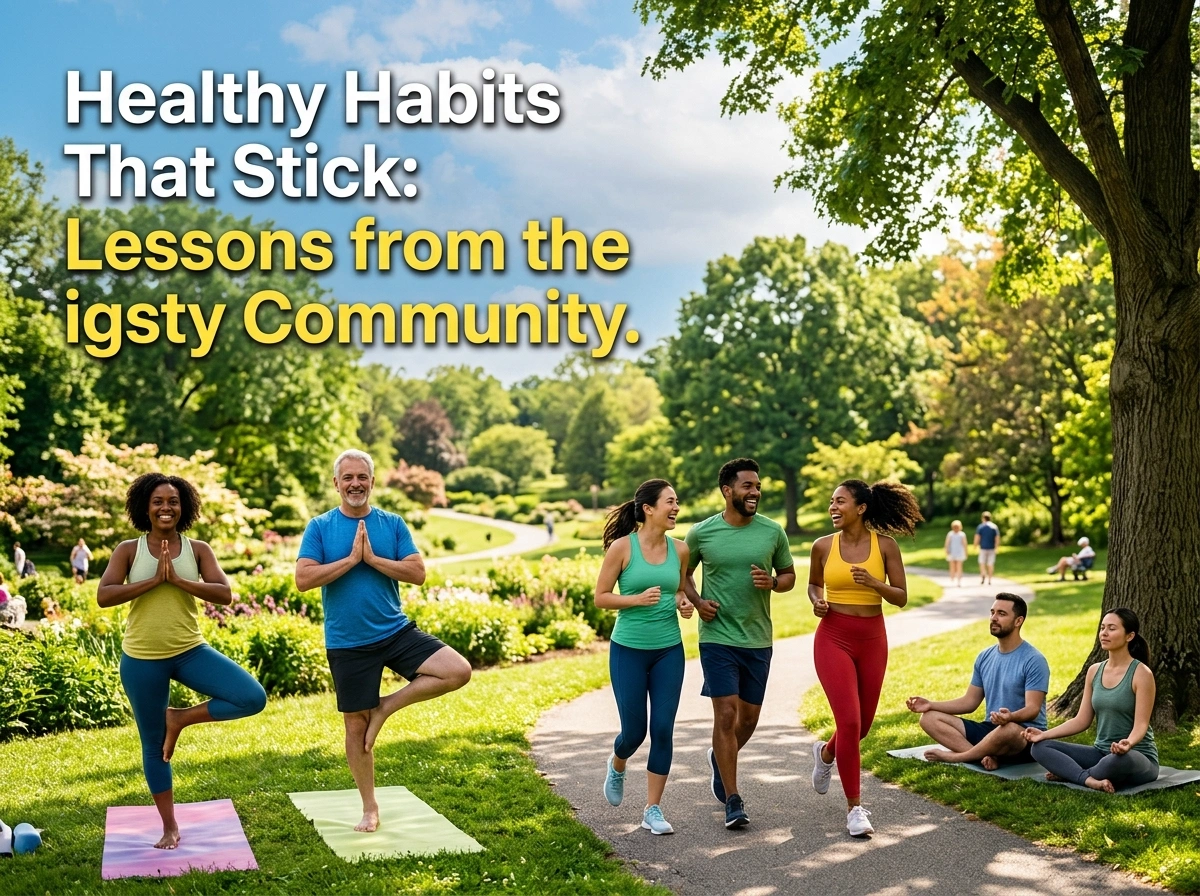
Most of us know what healthy living looks like. Move more. Sleep better. Eat real food. Drink water. So why does the gap between knowing and doing feel so wide? You set a goal on Monday, feel unstoppable for a week, then watch it quietly fade by the next.
The truth is that lasting change rarely comes from willpower alone. It comes from smart systems, the right environment, and a community that keeps you going when motivation runs dry. That’s exactly what people are discovering inside the igsty community, where members swap real strategies for building habits that actually hold up over time.
Let’s break down what makes healthy habits stick, why so many of us struggle, and how a supportive group can change everything.
Why Most Healthy Habits Fail
Here’s a number worth sitting with: studies suggest that roughly 80% of New Year’s resolutions are abandoned by February. That’s not because people are lazy or weak. It’s because they’re working against how habits actually form.
We tend to aim too big, too fast. “I’ll work out every day for an hour” sounds ambitious, but it sets you up for burnout. When life gets busy, the all-or-nothing mindset kicks in. Miss one day, feel like a failure, quit entirely.
The other problem is isolation. Trying to overhaul your life alone, without anyone to share wins or struggles with, makes the whole thing harder than it needs to be. Habits thrive on accountability and shared energy. Without it, motivation fizzles.
The Psychology of Habit Formation
To build habits that last, it helps to understand how they work under the hood. Researchers describe habits as a loop with three parts: a cue, a routine, and a reward.
- The cue is the trigger. It could be a time of day, a location, an emotion, or something you just did.
- The routine is the behavior itself, the thing you want to make automatic.
- The reward is the payoff your brain gets, which tells it the loop is worth repeating.
When you repeat this loop enough times, the behavior becomes wired in. You stop having to think about it. That’s the goal: turning effort into autopilot.
Start Smaller Than You Think
One of the most powerful ideas in habit science is shrinking the behavior until it feels almost too easy. Want to start exercising? Don’t commit to an hour. Commit to putting on your sneakers. Want to read more? Read one page.
This works because the hardest part is usually starting. Once you’ve put on the shoes, going for a short walk feels natural. Tiny habits build momentum, and momentum builds identity. Each small win tells your brain, “I’m the kind of person who does this.”
Stack Habits Onto What You Already Do
Another proven trick is habit stacking. You attach a new behavior to one that’s already automatic. The formula is simple: “After I [current habit], I will [new habit].”
For example: “After I pour my morning coffee, I’ll write down three things I’m grateful for.” The existing routine becomes the cue for the new one. You’re not building from scratch, you’re piggybacking on solid ground.
Healthy Habits Worth Building
So which habits give you the most return on your effort? You don’t need to do everything at once. Pick one or two, lock them in, then add more. Here are foundational habits the igsty community comes back to again and again.
1. Move Your Body Daily
Forget the idea that exercise has to mean a punishing gym session. The CDC recommends about 150 minutes of moderate activity per week, which breaks down to roughly 22 minutes a day. A brisk walk counts. So do dancing, gardening, and stretching. Consistency beats intensity every time.
2. Prioritize Sleep
Sleep is the quiet foundation of nearly every other healthy habit. When you’re rested, you make better food choices, handle stress more easily, and find the energy to move. Aim for a consistent bedtime, dim the lights an hour before, and keep screens out of bed.
3. Hydrate and Eat Whole Foods
You don’t need a complicated diet plan. Drink water throughout the day and build meals around whole foods: vegetables, fruits, lean proteins, and whole grains. A simple rule that sticks: add one vegetable to every meal. Small, repeatable, hard to mess up.
4. Protect Your Mental Health
Wellness isn’t only physical. A few minutes of daily mindfulness, journaling, or simply stepping outside can reset a stressed mind. Mental fitness deserves the same attention as physical fitness, and the two feed each other.
5. Build in Recovery
Rest isn’t the opposite of progress. It’s part of it. Schedule downtime, take real breaks, and give yourself permission to recharge. Burnout is the fastest way to kill a promising habit.
The Power of Community-Driven Wellness
Here’s where the magic really happens. You can have the best strategies in the world, but the people around you often determine whether you stick with them.
Research on behavior change consistently shows that we’re heavily influenced by our social circles. When the people around you value health, their habits rub off on you. You borrow their motivation on the days yours is missing. That’s the engine behind the igsty community: shared goals, shared wins, and shared accountability.
Accountability That Actually Works
Telling one supportive person about your goal dramatically raises the odds you’ll follow through. Multiply that across a whole community and you’ve got something powerful. When others expect you to show up, you show up, even when you’d rather not.
Celebrating Small Wins Together
Communities turn quiet progress into shared celebration. Logging a week of walks feels good on its own. Sharing it with people who cheer you on feels even better. That positive reinforcement strengthens the habit loop and keeps you coming back.
Learning From Real Stories
Generic advice only goes so far. What sticks is hearing how someone just like you fit a workout into a packed schedule, or finally fixed their sleep. Real stories from real members make healthy living feel achievable, not aspirational. That practical, peer-to-peer wisdom is something the igsty community does especially well.
How to Make Your Habits Last
Ready to put this into action? Here’s a simple framework to carry with you.
- Choose one habit. Resist the urge to change everything at once.
- Make it tiny. Shrink it until starting feels effortless.
- Anchor it. Stack it onto something you already do.
- Track it. A simple checkmark each day builds visible momentum.
- Share it. Tell your community and let accountability do the heavy lifting.
- Forgive slip-ups. Missing once is normal. Missing twice is where habits break, so get back on track fast.
The aim isn’t perfection. It’s consistency over time. A habit done imperfectly for a year beats a perfect plan that lasts two weeks.
Final Thoughts
Healthy habits that stick aren’t about heroic willpower or dramatic overhauls. They’re about smart, small steps repeated often, supported by an environment and a community that keep you moving forward.
Start with one habit. Make it easy. Anchor it to your day. And surround yourself with people who are chasing the same kind of growth. When you combine proven habit science with genuine community support, change stops feeling like a battle and starts feeling like a way of life.
Your next healthy habit doesn’t have to be big. It just has to begin today.
