

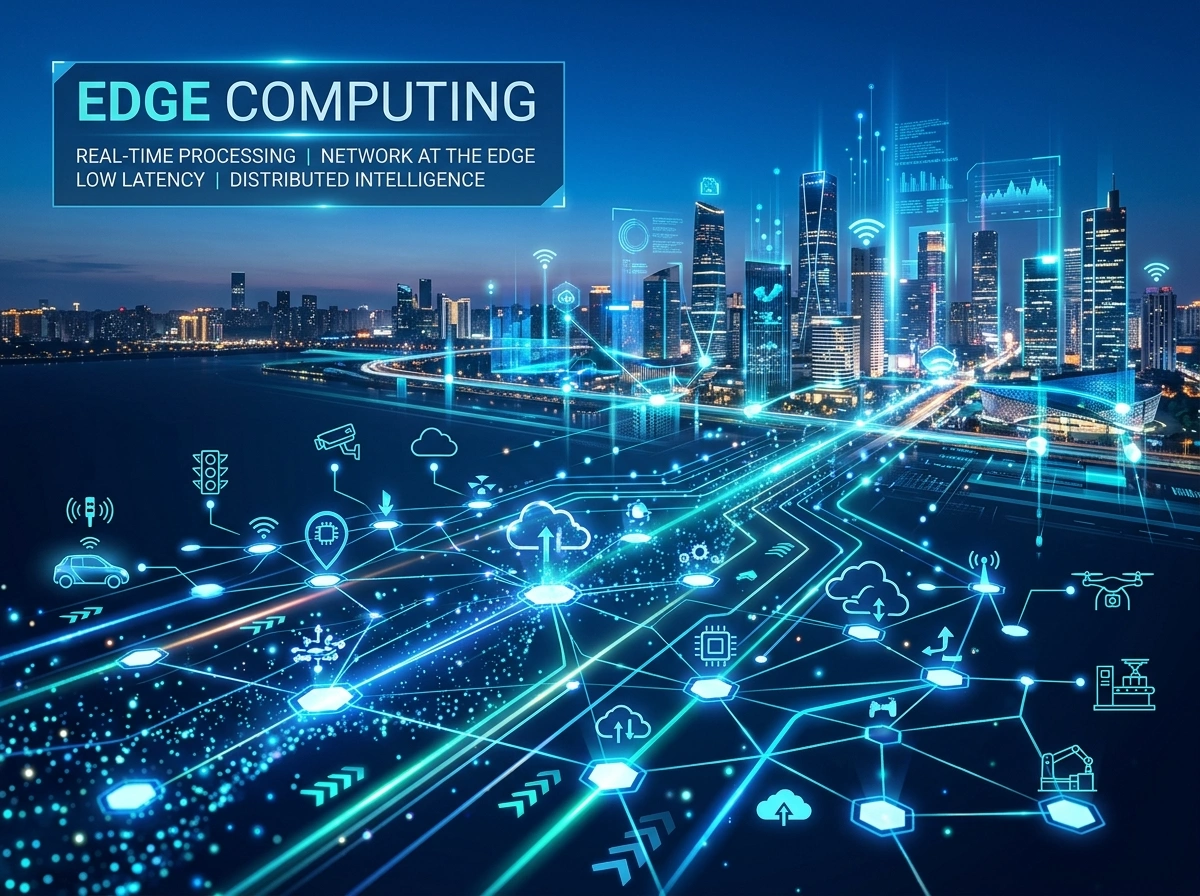
Data moves fast, but not always fast enough. As businesses across the United States lean harder on real-time information, the old model of sending every byte to a distant data center starts to show its cracks. That’s where edge computing steps in. It brings processing power closer to where data is actually created, cutting delays and unlocking possibilities that were once out of reach.
Let’s break down what edge computing really is, why it deserves your attention, and where industry watchers believe it’s headed.
What Is Edge Computing?
Edge computing is a way of processing data near its source rather than shipping it off to a centralized cloud server far away. Think of a smart camera analyzing footage on the spot, or a factory sensor making decisions in milliseconds. The “edge” refers to the outer boundary of a network, close to the devices generating information.
Traditional cloud computing routes data to massive facilities, sometimes hundreds of miles away. That round trip takes time. Edge computing shortens the journey. It handles the work locally, then sends only the important bits back to the cloud when needed. The result is faster response times, lower bandwidth costs, and better control over sensitive information.
Why Edge Computing Matters Right Now
The number of connected devices keeps climbing. From smart thermostats in homes across Texas to industrial equipment on factory floors in Ohio, everything is generating data. Processing all of it in a central location creates traffic jams, higher costs, and frustrating lag.
Here are the core reasons edge computing has become so important:
- Speed you can feel. Reducing the distance data travels slashes latency. For applications that depend on split-second decisions, this difference is everything.
- Lower bandwidth strain. By filtering and processing data locally, businesses send less information across their networks, easing congestion and cutting expenses.
- Stronger data privacy. Keeping sensitive data closer to home means it doesn’t have to travel across multiple networks, reducing exposure and supporting compliance with regulations like HIPAA and state privacy laws.
- Reliability during outages. Edge systems can keep working even when the connection to a central server drops, which matters for critical operations.
This tech-forward approach fits a market where high adoption rates and demanding customers reward companies that deliver instant, dependable experiences.
Key Use Cases Driving Adoption
Edge computing isn’t a theory sitting on a whiteboard. It’s already reshaping how industries operate. Here are some of the most compelling examples.
The Internet of Things (IoT)
Billions of IoT devices produce a constant stream of data. Sending all of it to the cloud would overwhelm most networks. Edge computing lets sensors and smart devices process information on-site, acting on it immediately. A connected thermostat can adjust temperatures without waiting on a distant server, and industrial sensors can flag equipment problems before they cause costly breakdowns.
Autonomous Vehicles
Self-driving cars cannot afford delay. A vehicle traveling at highway speed makes thousands of decisions per second. Waiting for a cloud server to respond could be dangerous. Edge computing processes camera feeds, radar, and sensor data right inside the vehicle, allowing near-instant reactions that keep passengers safe.
Healthcare
Hospitals and clinics increasingly rely on connected devices, from patient monitors to imaging systems. Processing this data at the edge means faster alerts for medical staff and better protection for sensitive health records. When a monitor detects a change in a patient’s vitals, edge systems can trigger an alert without a delay that might matter in an emergency.
Smart Cities
Municipalities from coast to coast are experimenting with connected infrastructure. Traffic lights that adapt to real-time congestion, energy grids that balance loads on the fly, and public safety systems that respond in seconds all depend on local processing. Edge computing makes these systems practical at scale.
Retail and Manufacturing
Retailers use edge tech to power checkout-free stores and personalized in-store experiences. Manufacturers deploy it to monitor production lines, predict maintenance needs, and reduce downtime. These localized solutions deliver measurable value without straining central networks.
The Role of Latency and Data Privacy
Two forces sit at the heart of edge computing’s rise: latency reduction and data privacy.
Latency is the delay between a request and a response. For streaming a movie, a slight lag is tolerable. For a robotic arm on an assembly line or a surgeon using a connected tool, even milliseconds count. By processing data at the edge, companies cut that delay dramatically. This opens the door to applications that simply weren’t possible with cloud-only setups.
Data privacy is the other major driver. When information stays close to where it’s created, it crosses fewer networks and faces fewer risks. This matters enormously in a country with a complex regulatory environment, where federal and state rules govern how personal and health data must be handled. Edge computing helps organizations keep sensitive data localized, supporting both compliance and customer trust.
Current and Future Growth Trends
The momentum behind edge computing is hard to ignore. Analysts project the global edge computing market to grow at a strong double-digit rate over the coming years, driven by the explosion of connected devices and the rollout of 5G networks.
Several trends are shaping this trajectory:
- 5G as an accelerator. Faster wireless networks make edge deployments more powerful, enabling richer applications in real time.
- AI moving to the edge. Machine learning models are increasingly running on local devices, allowing smart decisions without cloud dependence.
- Hybrid architectures. Most organizations won’t abandon the cloud. Instead, they’ll blend edge and cloud resources, using each where it makes the most sense.
- Industry-specific solutions. Vendors are building edge platforms tailored to healthcare, manufacturing, retail, and other sectors, reflecting the diverse needs across regions.
Observers who track the space, including analysts at tech hence, see edge computing shifting from a niche tool to a core part of modern digital strategy. The view is that companies embracing edge early will gain an advantage in speed, cost efficiency, and customer experience.
How Industry Watchers View the Trajectory
The consensus among industry observers is optimistic but grounded. Edge computing isn’t a replacement for the cloud. It’s a complement that fills gaps the cloud alone can’t address. As more workloads demand real-time processing, the balance will continue tilting toward the edge for time-sensitive tasks.
Adoption will vary across regions and industries. States with heavy manufacturing bases may lean into edge tech for factory automation, while urban centers push it forward through smart city projects. The common thread is a demand for faster, more localized, and more secure computing.
Challenges remain. Managing thousands of distributed edge nodes takes new skills and tools. Security at the edge requires careful planning. But these hurdles look manageable compared with the value edge computing delivers, and the market is responding with better management platforms and security frameworks every year.
Conclusion
Edge computing matters because it meets the demands of a world that expects instant answers, protects sensitive data, and refuses to tolerate lag. From IoT and autonomous vehicles to healthcare and smart cities, it’s already powering the applications that define modern life across the United States.
The growth ahead looks robust, fueled by 5G, artificial intelligence, and the relentless rise of connected devices. Businesses that understand this shift and act on it will be better positioned to serve their customers, control costs, and stay ahead of the curve. Edge computing isn’t just a passing trend. It’s becoming the backbone of how data-driven organizations operate, and its story is only beginning.
